


Modal analysis: vibrations, oscillations & natural frequencies
In modern mechanical and plant engineering, lightweight design and efficiency are essential. However, as these increase susceptibility to dynamic issues, precise modal analysis enables accurate prediction of your design’s vibration behavior. We identify critical natural frequencies and mode shapes before the first prototype is built and reliably safeguard your products against resonance damage and material fatigue.
Understanding vibration phenomena through modal analysis with FEA
Accurate dynamic predictions for mechanical and plant engineering
Disturbances caused by vibrations are more than just a nuisance in industrial environments, as they represent a serious safety risk. Every component has specific natural frequencies—the rhythms at which it is particularly prone to vibrate. If external excitation forces such as motor speeds, pump frequencies, or flow forces coincide with these natural frequencies of a structure, resonance may occur.
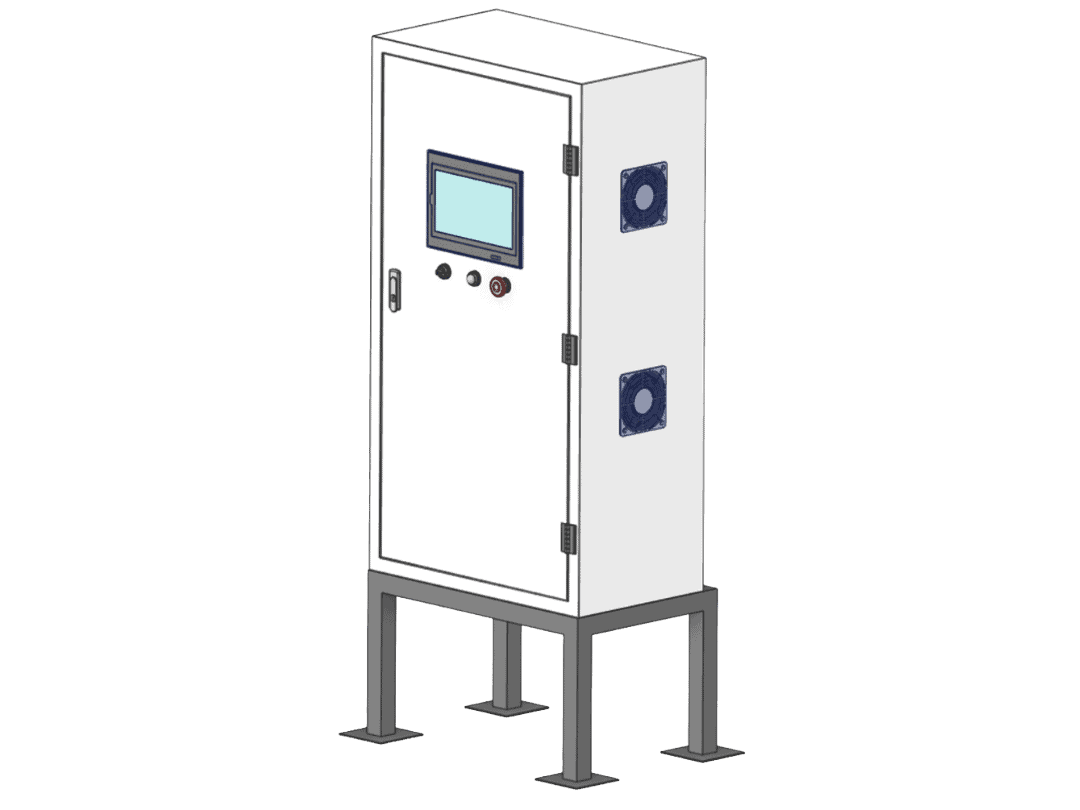
Using modal analysis, we transform complex continuous components into mathematical models. This allows us to precisely determine the natural frequencies at which your system reacts particularly sensitively. Whether pump units, machine tools, or industrial piping systems: we provide the data to deliberately detune resonance ranges and guarantee long-term operational safety.
Our Service Portfolio
Dynamics expertise for your development
We support you in designing dynamically loaded systems with verifiable calculations and sound technical assessment.
 Learn more
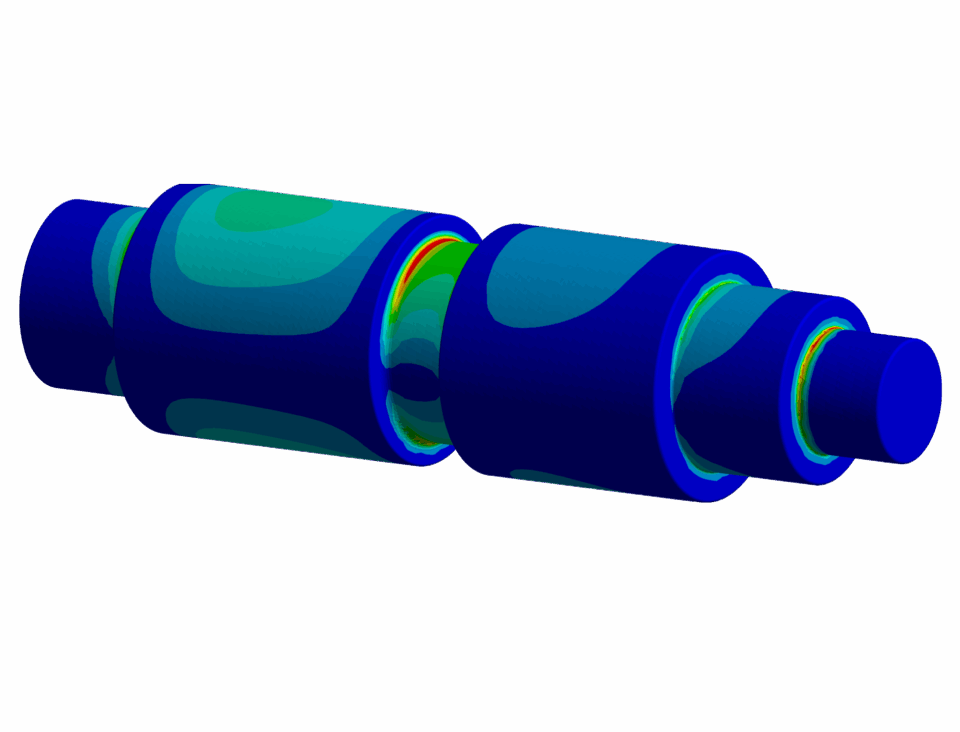
Fatigue Strength Assessment
Fatigue describes the gradual failure of components under repeated, cyclic loading.
 Learn more
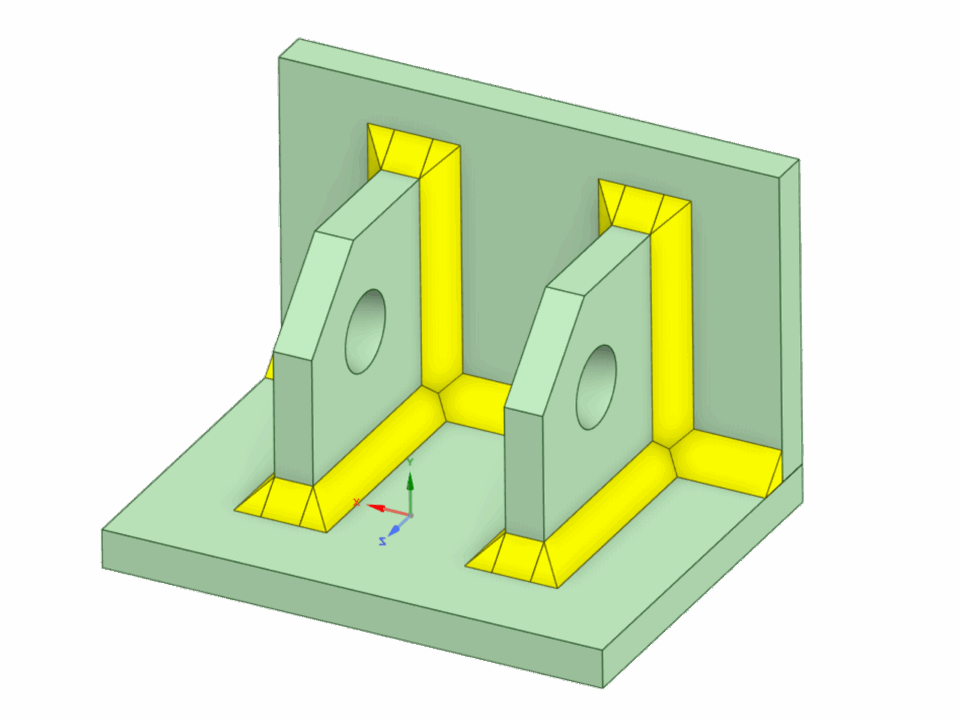
Weld Calculation
Load-compliant design of weld seams for static and cyclic stress.

Component optimization
Increased competitiveness through targeted and effective component optimizations, such as material usage.

An FEA modal analysis is useful for you if …
Your challenges – our solutions
the dynamic function is to be ensured before commissioning, to guarantee maximum safety and predictability.
a vibration verification is mandatory, for example for CE documentation, machine approvals, or specific industry standards.
critical resonance weak points due to coinciding natural frequencies are to be identified at an early stage, even before the first physical prototypes are built.
the development of your products is to be faster and more cost-efficient by using targeted simulations to avoid expensive rework.
component behavior under dynamic loading is decisive, with the avoidance of harmful vibrations and oscillations as the focus.
Benefits of FEA-based vibration calculation
Measurable Benefits. Demonstrable Quality.
Alongside statics, modal analysis is an important pillar of structural mechanics. It offers you measurable advantages in the development process:
Cost reduction & reduced development times
Avoid expensive “trial-and-error” cycles on physical prototypes. Problems caused by unfavorable natural frequencies are resolved as early as the digital design phase, massively shortening development time.
Precise modal superposition
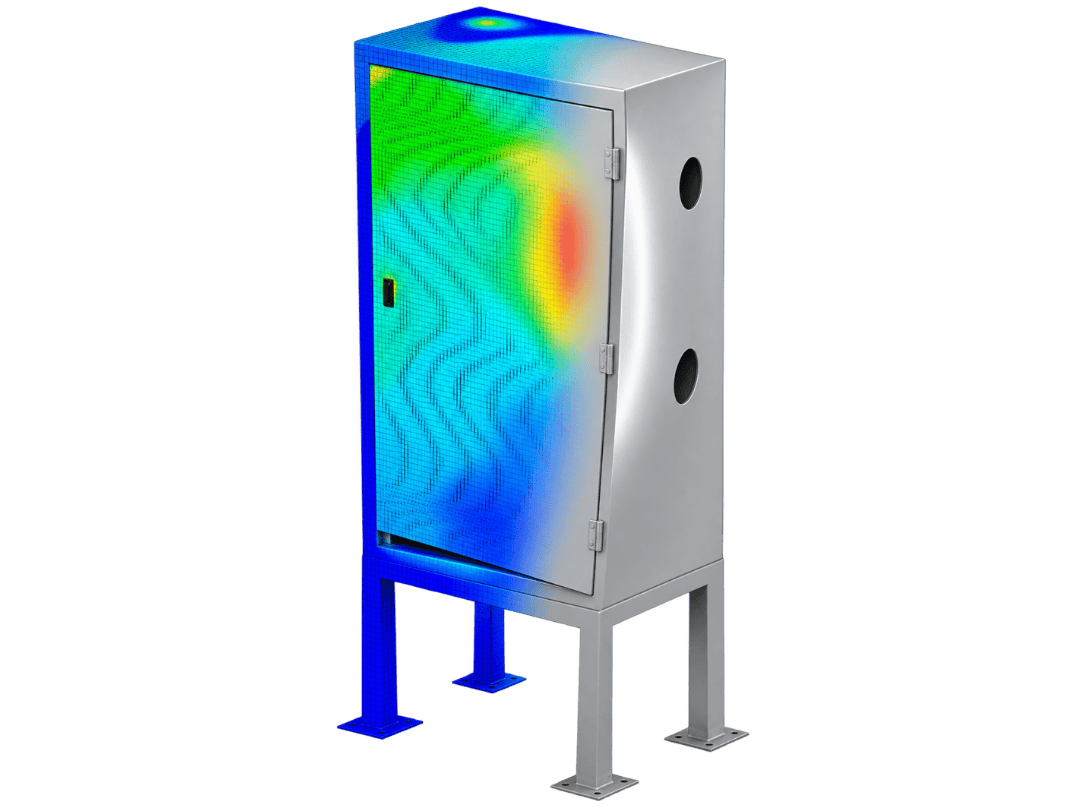
By decomposing complex vibrations into individual, decoupled mode shapes, we gain a deep understanding of structural mechanics. This enables targeted stiffening exactly where it achieves maximum effect.
Sound bases for decision-making
FEA-based vibration analysis provides clear, quantifiable results on natural frequencies, mode shapes, and critical areas. This enables data-driven design decisions and objective prioritization of optimization measures—for technically and economically optimal solutions.
Our Expertise for Your Project
We look forward to your inquiry!
We support you from CAD simplification and mesh optimization (discretization) through to interpretation and evaluation of natural frequencies. Do you have a specific question about vibrations in your systems? We look forward to hearing from you—by phone, email, or in person.
Your contact: Jonas Compart
elbcore engineers GmbH
Lerchenstraße 28a
22767 Hamburg

Strong Across Industries
Our services are applied across various industries
Our engineering services are used in a wide range of industries – wherever safety, efficiency, and technical precision are required.
Plant & Vessel Construction
Electrical Engineering
Mechanical Engineering
Metal / Steel Construction
Shipbuilding
Special Machine Construction
Valve & Pump Technology
Is your industry not listed?
Contact Us Now
Do you have an exciting project?
Tell us about it.
Book a consultation now or send us a project enquiry.
Frequently asked questions about modal analysis – vibrations & oscillations
FAST ANSWERS. CLEAR SOLUTIONS.
What exactly is the difference between natural frequency and vibration?
Natural frequency is a component-specific property (like DNA) that indicates the frequency at which the component “likes” to vibrate. Vibration (or oscillation) is the actual motion that only arises due to external excitation. Modal analysis helps us align the two.
Does FEA modal analysis also take nonlinear effects into account?
No, classical modal analysis is a linear method for determining natural frequencies. Changes in contact conditions or plastic deformations are not captured. For such special cases, we use additional nonlinear transient analyses.
How accurate are the calculated vibration amplitudes?
The values calculated in a pure modal analysis are not real amplitudes (in mm), but show the relative deformation states (mode shapes). For absolute amplitudes under load, we perform a frequency response analysis in the next step.
Can thermal preloads be taken into account?
Yes. For preloaded structures (e.g., due to assembly forces or thermal loads), which can significantly influence natural frequencies, we first perform a static FEA analysis to correctly account for the stress state.
Do you still have questions? We are here to help.
Contact us now