


Pressure Loss Calculation
A precise pressure loss calculation is crucial for the performance of plants, pipelines, and technical components.
We analyze pressure losses in lines, valves, fittings, and complex geometries, providing reliable, transparent results for planning, optimization, and operation.
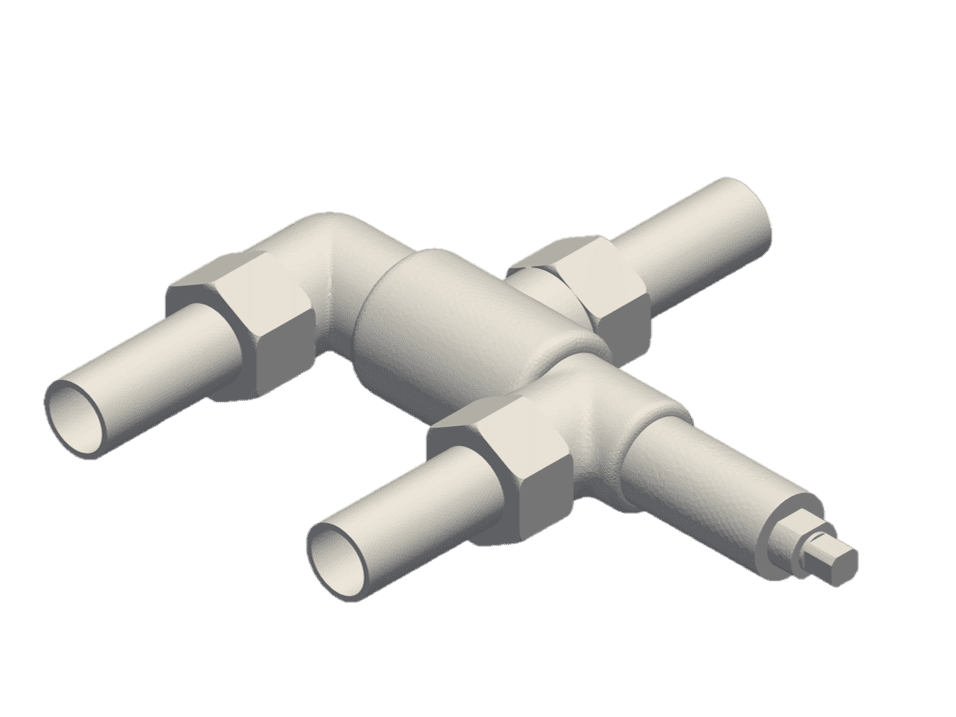
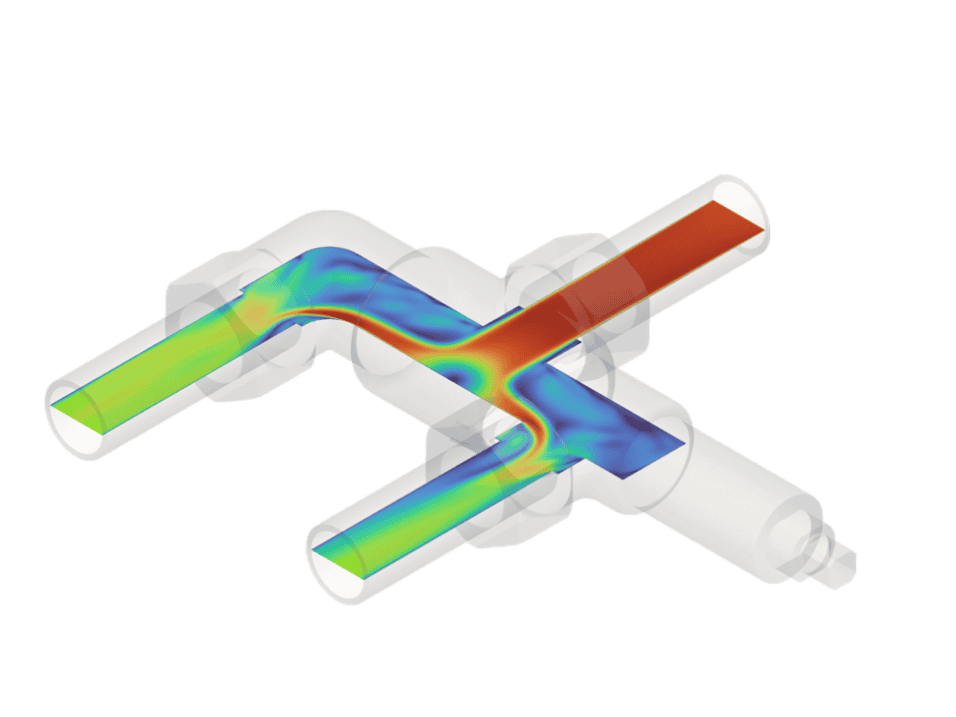
Pressure Loss Analysis via CFD Simulation
Exact Insights for Safe and Efficient Systems
The pressure loss determines the energy requirements, flow rate, and operational stability of technical systems. Classic calculation methods quickly reach their limits – especially with complex geometries, variable operating conditions, or unclear flow profiles.
With CFD simulations, we visualize flows in detail and determine pressure losses with high precision. This allows bottlenecks, vortex zones, unfavorable flow paths, or locally high pressure drops to be identified early and specifically remedied. Typical applications range from pipe elbows, T-pieces, and valves to heat exchangers, pump intakes, or industrial duct flows.
Our Services
Pressure Loss Calculation
We create pressure loss analyses for simple and complex systems and provide verifiable, transparent calculations for design, dimensioning, and plant optimization.
 Learn More
Pressure Vessel Design
We support you in the safe design, calculation, and construction of pressure vessels.
 Learn More
Temperature Distribution
CFD simulations can be used to realistically model the heating and cooling behavior of your flows.
 Learn More
Velocity Distribution
We analyze flows in your systems – precise, transparent, and with clear insights into dead zones and flow patterns.
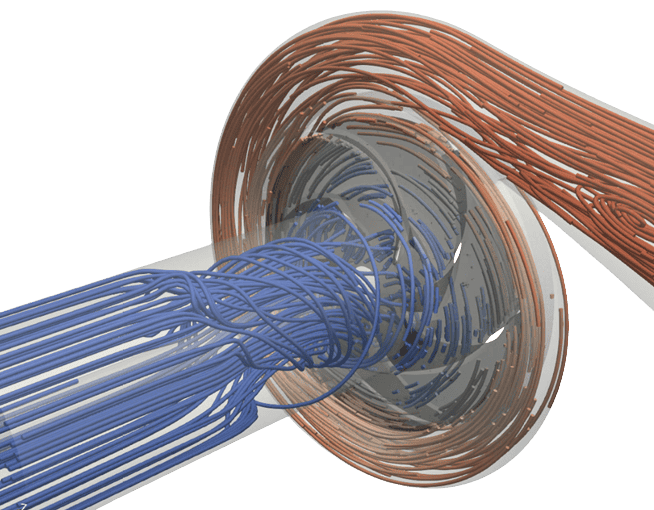
A pressure loss calculation is beneficial for you if...
Your challenges – our solutions
You want to precisely determine the pressure loss in pipelines, ducts, valves, or technical components.
You want to identify and specifically improve bottlenecks, vortex zones, flow separations, or unfavorable flow routing.
You are planning energy-efficient systems and want to reliably dimension the power requirements of pumps or blowers.
You want to compare variants or optimize geometries without having to manufacture expensive prototypes.
You need to reliably map unclear flow conditions, changing operating parameters, or complex media conditions.
You require a reliable basis for design, dimensioning, or troubleshooting – with clear, transparent simulation results.
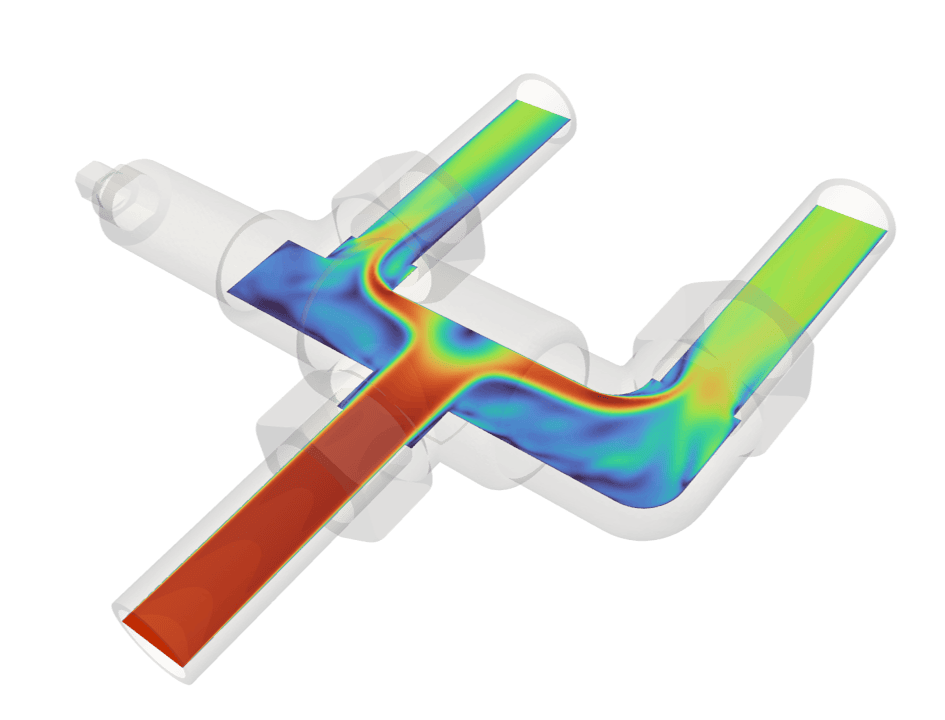
Advantages of Pressure Loss Calculation
Measurable Benefits. Demonstrable Quality.
With a well-founded pressure loss analysis, you gain transparency regarding the flow behavior of your systems – and receive the basis for making plants safer, more efficient, and more economical.
Higher Accuracy
The pressure loss calculation takes into account real flow phenomena, material properties, and boundary conditions – for significantly more precise results than simplified formulas.
Economic Optimization
Geometries, components, or operating states can be specifically adapted to reduce pressure losses and thus energy requirements.
Clear Basis for Decision-Making
Pressure gradients, velocity profiles, and quantitative evaluations provide a solid basis for design, dimensioning, and troubleshooting.
Our expertise for your project
We look forward to your inquiry!
We support you through all steps of the pressure loss calculation – from modeling and analysis to technical evaluation.
Do you have questions, need an assessment, or want to start directly?
We look forward to hearing from you – by phone, email, or in person.
Your contact: Jonas Compart
elbcore engineers GmbH
Lerchenstraße 28a
22767 Hamburg

Strong Across Industries
Our services are applied across various industries
Our engineering services are used in a wide range of industries – wherever safety, efficiency, and technical precision are required.
Plant & Vessel Construction
Electrical Engineering
Mechanical Engineering
Metal / Steel Construction
Shipbuilding
Special Machine Construction
Valve & Pump Technology
Is your industry not listed?
Contact Us Now
Do you have an exciting project?
Tell us about it.
Arrange a consultation now or send us a project inquiry.
Frequently Asked Questions about Pressure Loss Calculation (FAQ)
Quick Answers. Clear Solutions.
Here you will find answers to the most frequently asked questions about our services.
Which systems can be examined regarding pressure loss?
We calculate pressure losses in pipelines, valves, fittings, T-junctions, branches, heat exchangers, pump intake sections, ducts, and special geometries.
Even complex plant sections can be fully analyzed.
What data is required for a pressure loss analysis?
Typical data includes: geometry (CAD), fluid data, operating conditions (flow rate, temperature, pressure), surface roughness, and boundary conditions.
Why is an accurate pressure loss calculation important for systems and components?
A precise pressure loss calculation is crucial for the safe and energy-efficient design of flow systems. Pressure loss directly influences the delivery requirements of pumps or blowers and thus the power consumption and operating costs. Furthermore, an accurate analysis allows critical points such as bottlenecks, flow separation, or unfavorable diversions to be identified early and optimized through design.
Reliable data helps avoid over-dimensioning, correctly determine operating points, and increase the reliability of the overall system.Can concrete optimization proposals be derived from the pressure loss analysis?
Yes, concrete and technically sound optimization measures can be derived from the pressure loss analysis. By comparing different variants, it becomes clear how changes to geometry, flow routing, or operating conditions affect the pressure loss. For example, cross-sections can be adapted, diversions improved, or fittings positioned more favorably for flow.
The results are lower pressure losses, reduced energy requirements, and more stable operating behavior for your system.
Do you still have open questions? We are here for you.
Contact Us Now