


Stability Analysis
In modern designs, maximum material utilization leads to increasingly slender and thin-walled components. However, under compressive loads, these often fail due to sudden lateral deflection long before reaching material strength.
With FEA-based stability analyses, we determine the exact ultimate load capacity of your structures and provide code-compliant verifications against buckling and crippling for maximum operational safety.
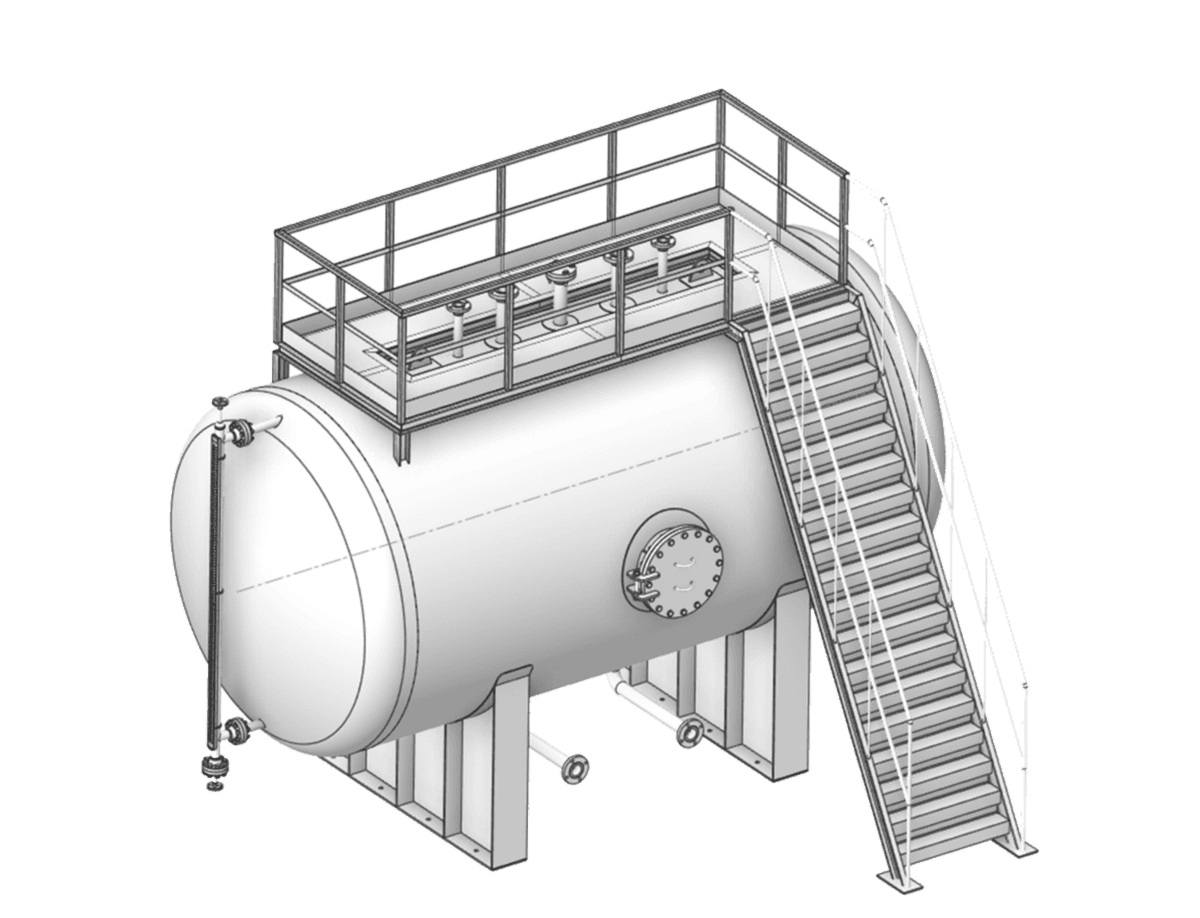
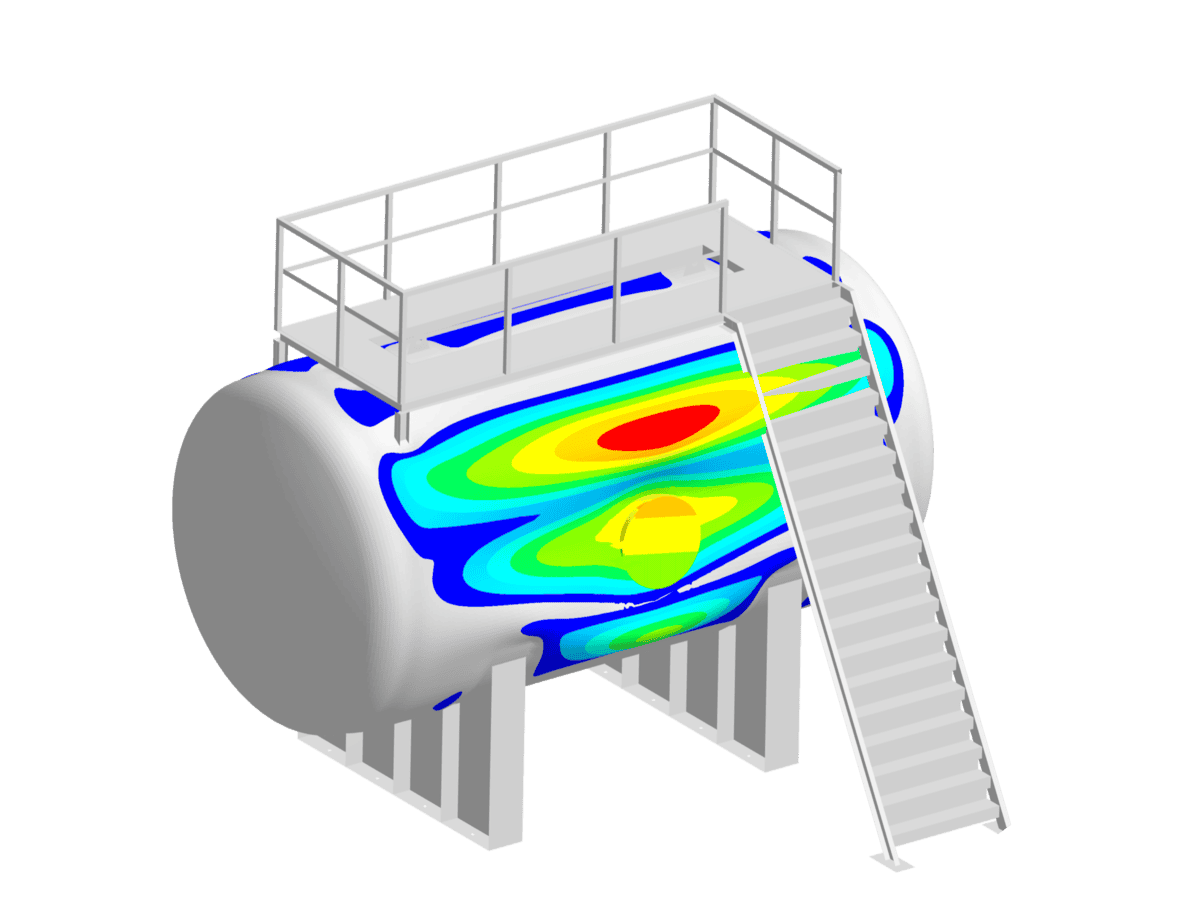
Stability Investigations for Mechanical and Steel Engineering
Safety for Slender and Thin-Walled Structures
Stability failure is insidious because it occurs without warning. When slender rods or thin plates are loaded, they lose their stable equilibrium at a critical load. Higher material strengths alone do not solve this problem. Only sophisticated geometry and its precise computational verification can help here.
Using the Finite Element Method (FEA), we perform both linear bifurcation analyses and highly complex non-linear collapse analyses. We investigate the load-bearing behavior of real structures, considering imperfections and elasto-plastic material behavior. Whether complex crane structures, inland vessels, or industrial tanks: We visualize failure behavior and optimize your design for maximum stability.
Our services
Stability & Load Capacity
We offer you the entire spectrum of stability verifications according to current standards (e.g., Eurocode 3, DIN EN 13445) and beyond.
 Learn more
Static Strength Verification
A static strength verification checks whether a component can withstand the intended loads safely and permanently.
 Learn more
Fatigue Strength Assessment
Fatigue describes the gradual failure of components under repeated, cyclic loading.

Component optimization
Increased competitiveness through targeted and effective component optimizations, such as material usage.
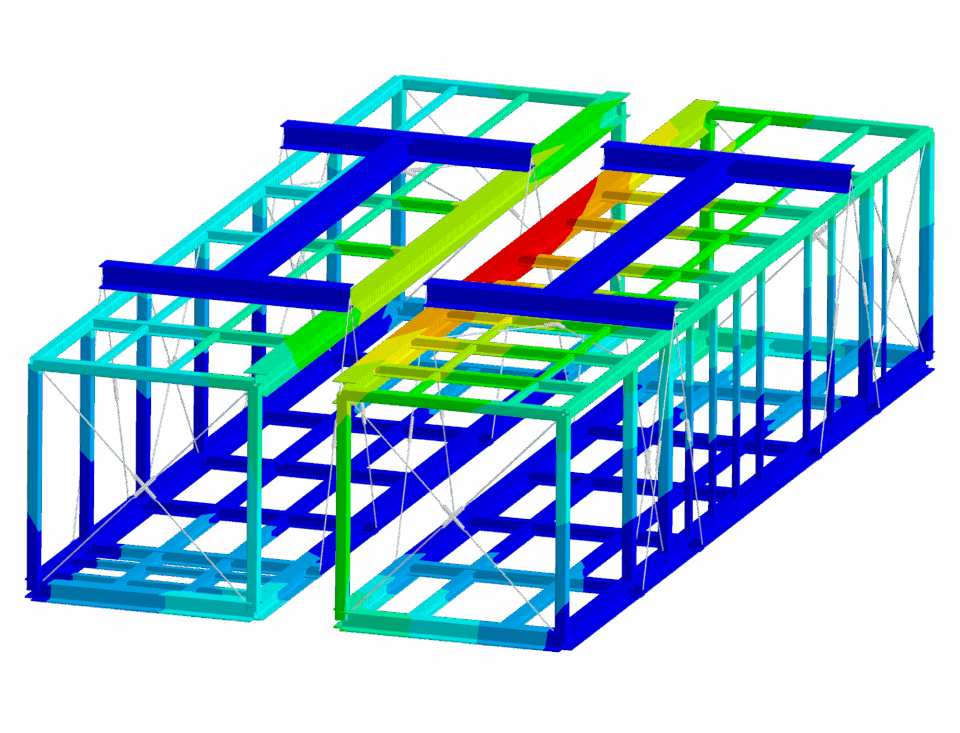
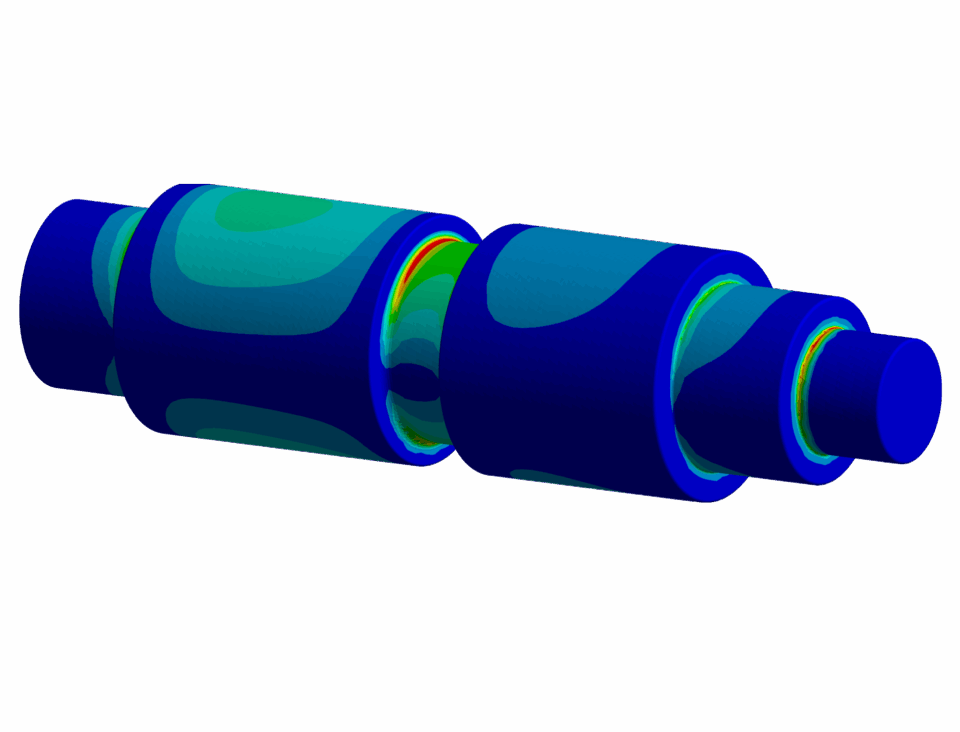

Stability analyses are useful when…
Your Safety – Our Responsibility
the function needs to be ensured before use, especially for high compressive loads and slender components.
a strength verification is mandatory to meet standards such as Eurocode 3 or pressure vessel verifications for approval procedures.
weak points need to be identified early to prevent collapse events due to instability during digital planning.
development needs to be faster and more cost-effective by saving material without compromising structural stability.
component behavior under load is critical, focusing on sensitivity to manufacturing-related imperfections.
Advantages of Stability Analysis
Measurable Benefits. Demonstrable Quality.
Failure due to buckling or crippling is often underestimated in classical design. Our analyses offer you a well-founded assessment far beyond simple formula calculations.
Precise Ultimate Load Determination
We determine the exact point at which stable equilibrium transitions into unstable equilibrium, thereby preventing sudden structural collapse.
Realistic Simulation (GMNIA)
By considering initial deformations (imperfections) and plastification, we deliver results that correspond to real component behavior.
Optimized Lightweight Construction
Utilize the full potential of your materials. We show you how to massively increase stability through targeted stiffening without unnecessarily increasing weight.
Our expertise for your project
We look forward to your inquiry!
We support you with all questions regarding structural stability – from simple buckling analysis to complex crippling investigations of stiffened shell structures. Do you have questions about the stability of your design or require verifiable proof? We look forward to hearing from you – by phone, email, or in person.
Your contact: Jonas Compart
elbcore engineers GmbH
Lerchenstraße 28a
22767 Hamburg

Strong Across Industries
Our services are applied across various industries
Our engineering services are used in a wide range of industries – wherever safety, efficiency, and technical precision are required.
Plant & Vessel Construction
Electrical Engineering
Mechanical Engineering
Metal / Steel Construction
Shipbuilding
Special Machine Construction
Valve & Pump Technology
Is your industry not listed?
Contact Us Now
Do you have an exciting project?
Tell us about it.
Book a consultation now or send us a project enquiry.
Frequently Asked Questions about Stability Analysis
FAST ANSWERS. CLEAR SOLUTIONS.
Here you will find answers to the most common questions regarding stability analysis.
What is the difference between buckling and crippling?
Buckling refers to rod-shaped components that deflect laterally under compressive load. Crippling describes the instability behavior of planar structures such as sheets, plates, or shells. Both effects lead to a loss of load-bearing capacity.
Why is a linear eigenvalue calculation sometimes insufficient?
Linear Eigenvalue Buckling Analysis (LBA) is a fast and conservative method for estimating critical buckling loads. However, it is based on idealized assumptions, particularly a perfect geometry without imperfections. In reality, components always exhibit initial deformations and other disturbances.
While LBA allows for an initial, simplified assessment, it cannot fully capture the actual load-bearing behavior. Therefore, for a more realistic and accurate evaluation, non-linear methods such as GNIA (Geometrically Non-linear Elastic Analysis with Imperfections) or GMNIA (Geometrically and Materially Non-linear Analysis with Imperfections) must often be used, as these consider geometric and, if applicable, material non-linearities as well as imperfections.
What data is required for a stability investigation?
In addition to the CAD model, we require detailed information on load application points, boundary conditions (supports), and material properties. For code-compliant verifications, information on required safety factors and manufacturing tolerances (for imperfection assumptions) is also important.
Do you also consider imperfections (initial deformations) in the buckling analysis?
Yes, this is a crucial part of our work. Since real components are never perfectly straight, we integrate geometric imperfections (e.g., based on eigenmodes) into our GMNIA calculations. This is the only way to reliably determine the real load capacity, as imperfections can massively reduce buckling stability.
Do you still have questions? We are here to help.
Contact us now