

Design of Lifting Equipment
Lifting equipment must withstand extreme loads in daily lifting operations. We support manufacturers and operators with precise FEA simulations and standard-compliant calculations to proactively ensure the safety of personnel and loads and minimize liability risks.
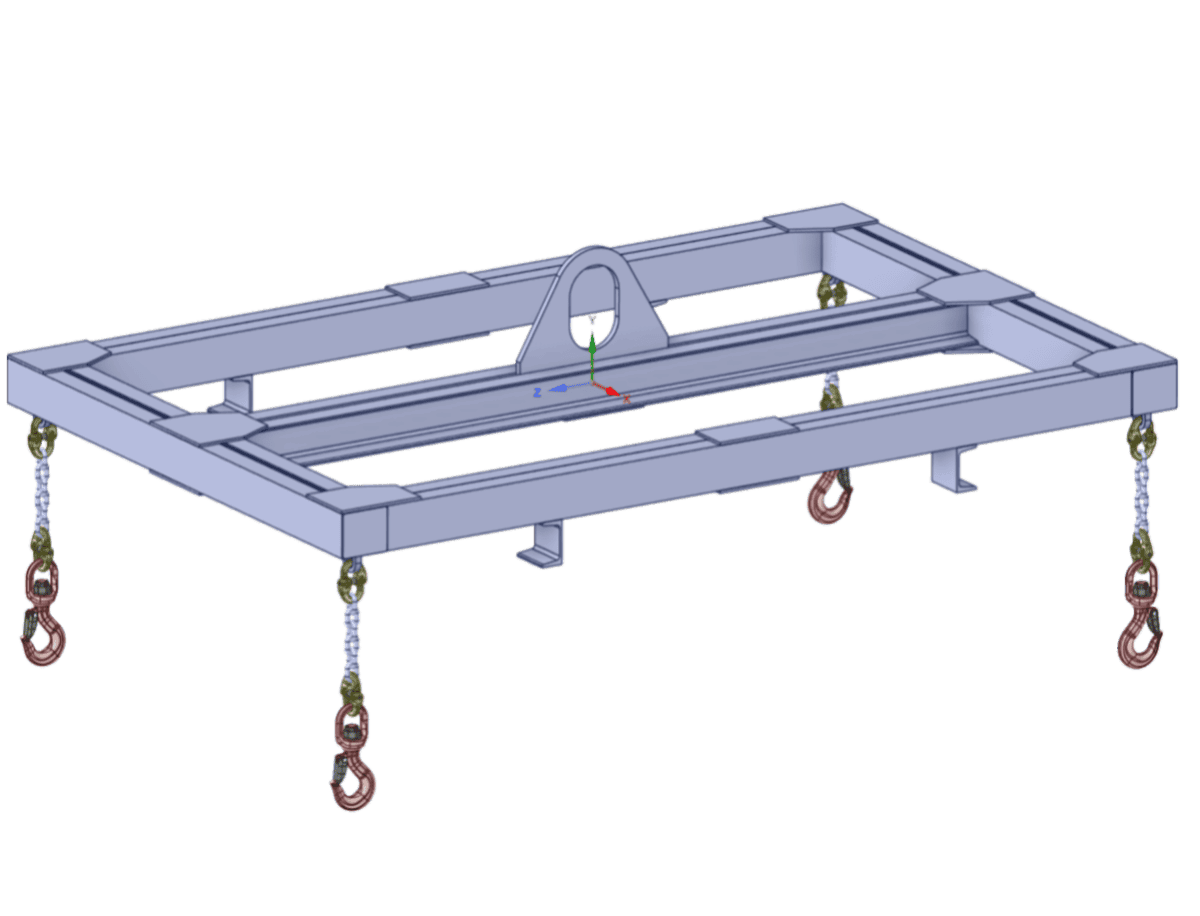
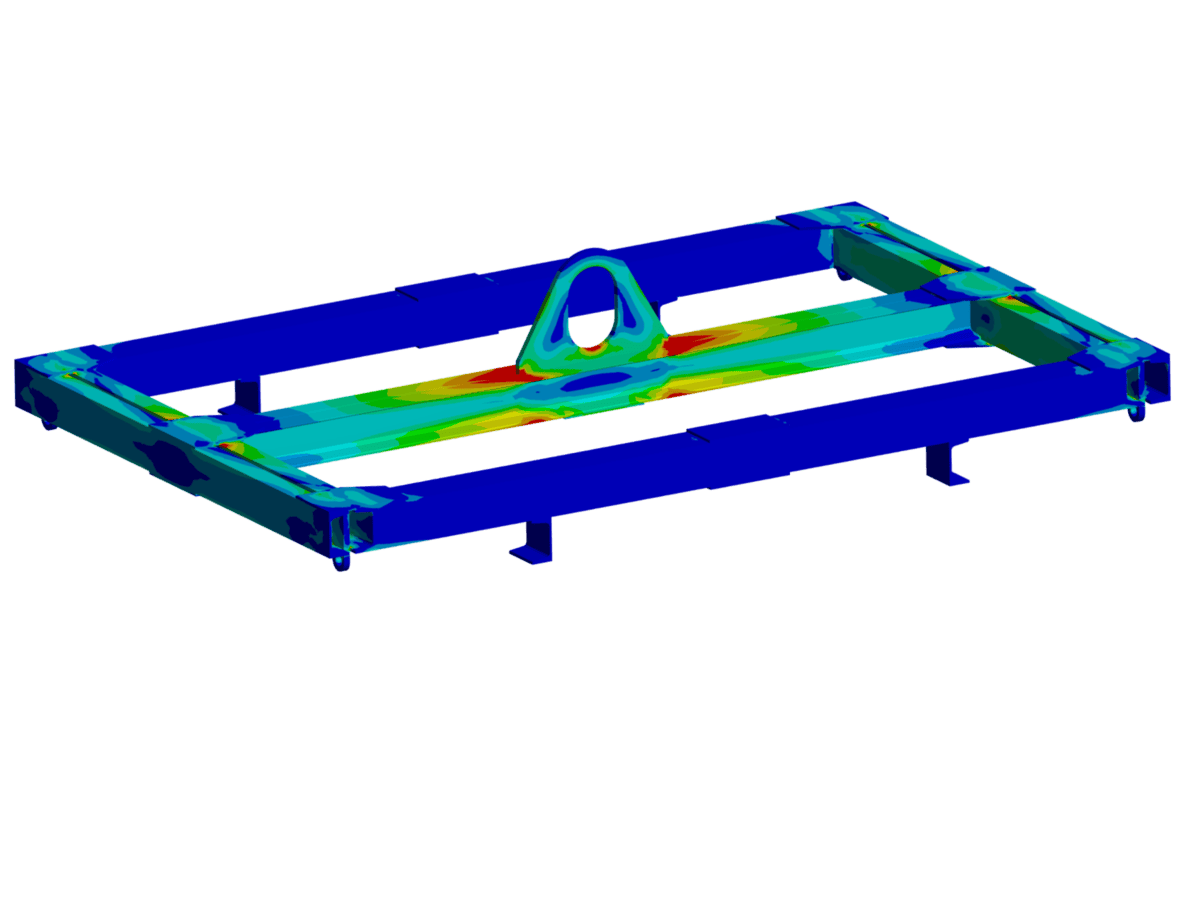
Simulation and Design of Lifting Equipment
Safe & Standard-Compliant According to Machinery Directive
The reliability of hoists, crossbeams, and grippers is a crucial safety and quality feature for every operation. We help you precisely predict the mechanical strength of these critical structures.
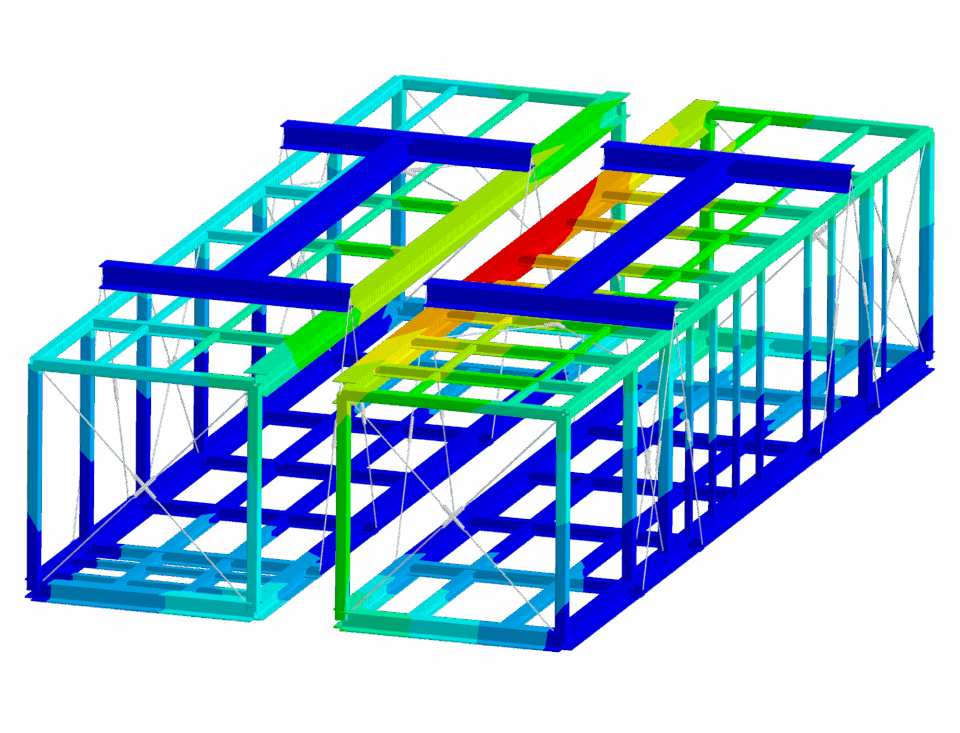
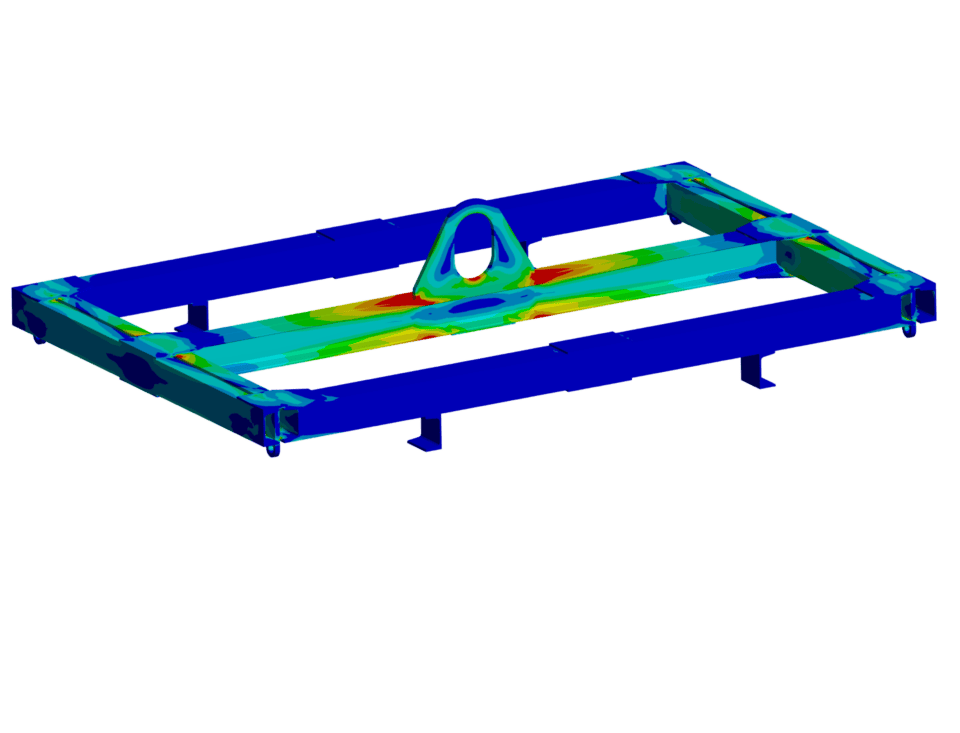
Our calculations capture stress distributions within components and at connection points with high local resolution. This applies equally to the new design of specialized lifting tools as well as to the safety assessment and adaptation of existing geometries to new applications. Through the well-founded calculation of lifting equipment, we create the basis for a safe and economical design concept.
Our Services for Lifting Equipment Design
Simulation of Load Capacities and Deformations
We create detailed analyses, strength verifications, and simulations for the load capacity of hoists and slings. This way, we support you with verifiable documents for design, safe operation, and preparation for certifications. Results from structural analyses can be directly used for targeted weight and geometry optimization of the systems.
 Learn More
FEA Analysis / Structural Simulation
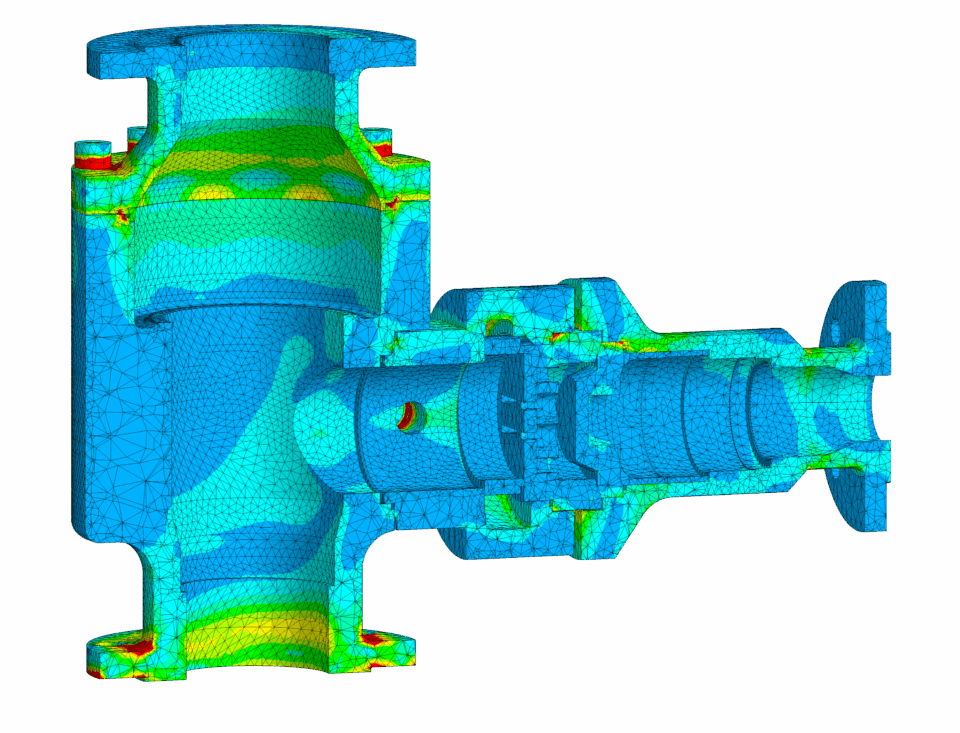
FEA analyses are a valuable tool for product development, making the behavior of components and assemblies visible under various loads.
- Learn More
Static Strength Verification
A static strength verification checks whether a component can withstand the intended loads safely and permanently.
 Learn More
Weld Calculation
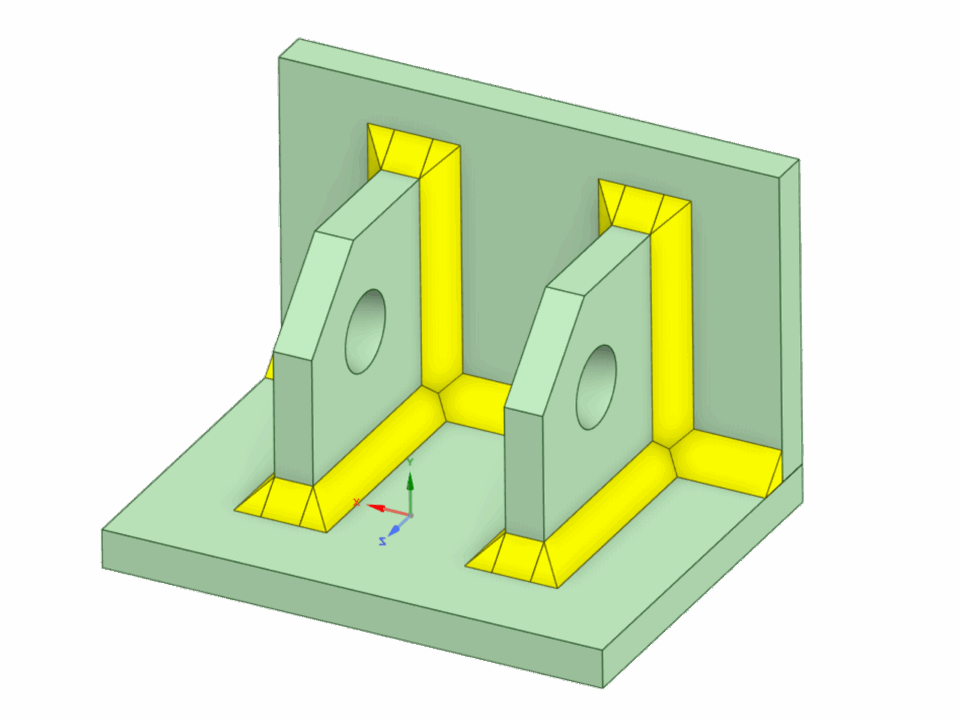
Load-compliant design of weld seams for static and cyclic stress.
Why a Well-Founded Design of Lifting Equipment Makes Sense for You
Measurable Benefits. Calculative Certainty.
You must guarantee personnel safety in the lifting area through complete load capacity and stability verifications.
You want to secure complex geometries and special designs where classical analytical formulas reach their limits.
You require verifiable calculation documentation for commissioning and CE marking according to Machinery Directive 2006/42/EC.
You need to project the exact intensity of use (service life, load cycles) to effectively prevent fatigue fractures in continuous operation.
You want to reduce material costs and dead weight through data-driven analyses without jeopardizing the required safety factors.
Your Benefits from Our Lifting Equipment Design
Measurable Benefits. Demonstrable Quality.
With careful simulations, precise stress calculations, and reliable analyses, we create a trustworthy foundation for the planning, design, and safe operation of your lifting devices.
Standard-Compliant Verification for Certification
Calculations and verifications according to relevant standards for lifting equipment design such as DIN EN 13155, (parts of DIN EN 13001) or Eurocode 3. We provide you with complete, verifiable technical documentation for your declaration of conformity.
Optimized System Protection
We identify critical weak points, specifically evaluate connections like welds and screws, and perform stability analyses against buckling and bulging – for maximum operational safety.
Planning Certainty & Time Savings
Validated data minimizes the liability risk of in-house designs and accelerates the approval process. You benefit from smooth audits and avoid costly rework after manufacturing.
Our expertise for your project
We look forward to your inquiry!
We accompany you through all steps of lifting equipment design – from the initial concept phase and FEA simulation to the creation of verifiable documents for your documentation.
Do you have questions, need an assessment, or want to start directly?
We look forward to hearing from you – by phone, email, or in person.
Your contact: Jonas Compart
elbcore engineers GmbH
Lerchenstraße 28a
22767 Hamburg

Strong Across Industries
Our services are applied across various industries
Our engineering services are used in a wide range of industries – wherever safety, efficiency, and technical precision are required.
Plant & Vessel Construction
Electrical Engineering
Mechanical Engineering
Metal / Steel Construction
Shipbuilding
Special Machine Construction
Valve & Pump Technology
Is your industry not listed?
Contact Us Now
Do you have an exciting project?
Tell us about it.
Arrange a consultation now or send us a project inquiry.
Frequently Asked Questions about Lifting Equipment Design (FAQ)
Quick Answers. Clear Solutions.
Here you will find answers to the most common questions regarding the calculation and strength verification of lifting equipment.
For which types of lifting equipment do you perform design and calculation?
Our range of services includes a variety of hoists, slings, and handling systems. We calculate and optimize both standardized operating equipment and highly specific special designs. These include, among others:
- Crossbeams: Lifting, load, beam, and crane crossbeams
- Gripping and Clamping Tools: Grippers, tongs, clamps, and spreaders
- Form-fitting Components: C-hooks, crane forks, load forks, and telescopic forks
- Fixtures & Structures: Turning and rotating devices, assembly fixtures, special tools, as well as heavy machine frames and supports
No matter how complex your individual geometry or kinematics – we provide the appropriate, standard-compliant strength verification.
Why is an FEA calculation often necessary for lifting equipment?
Many lifting devices are individual special designs precisely tailored to customer-specific lifting tasks. Analytical hand calculations quickly reach their limits with complex geometries or integrated kinematics. FEA simulation makes it possible to precisely map any assemblies digitally and accurately identify weak points.
Which standards for lifting equipment design must be considered?
The selection of regulations depends heavily on the intended use and load cycles. For loose lifting equipment with fewer than 16,000 load cycles, DIN EN 13155 applies. For higher intensity of use, DIN EN 13001 applies. In addition, we use Eurocode 3 for steel structures, as well as the FKM guideline for mechanical components.
Do self-built lifting equipment for internal use also need to be certified?
Yes. Lifting equipment falls unreservedly within the scope of Machinery Directive 2006/42/EC. This means that even for purely in-house use, a strength verification must be provided, a declaration of conformity issued, and CE marking affixed to guarantee legal safety.
In which project phase should the design and FEA simulation ideally take place?
Ideally, you should integrate the calculation already in the early design phase. This way, necessary optimizations to the geometry or welds can be implemented cost-effectively on the digital model before material is purchased, manufactured, or a prototype is built.
Do you still have open questions? We are here for you.
Contact Us Now