


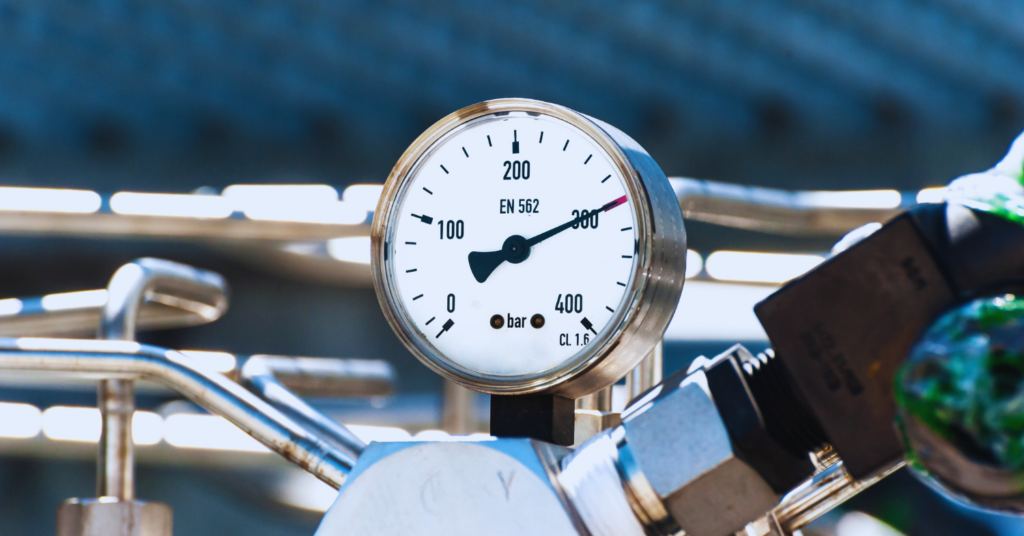
The safety and quality of pressure equipment are of crucial importance in numerous industrial sectors. A code that comprehensively covers these aspects is the AD 2000 Directive.
Significance of the AD 2000 Directive for Industry
The world of technology and industry often faces the challenge of safely designing and operating complex plants and systems. Pressure equipment is used in a variety of industrial sectors, such as chemistry or power generation. Generally, the safety of people and the environment is paramount, and it is crucial to prevent failure of pressure equipment, which can have catastrophic consequences. The AD 2000 Code ensures that pressure equipment is professionally designed, manufactured, and tested to prevent failure. As a result, the designed pressure equipment complies with the highest safety and quality standards.
Origin and Development of the AD 2000 Directive
The history of the AD 2000 – Pressure Equipment Directive dates back to the 20th century. It was developed to create a uniform standard for the design and manufacture of pressure equipment. Technical progress and increasing demands for safety and quality have led to updates and extensions over time. A key player in relation to the AD 2000 Directive is TÜV (Technischer Überwachungsverein). It plays a significant role in the certification of pressure equipment and the monitoring of compliance with the directive, thereby also ensuring safety and quality.
Scope and Application of the AD 2000 Directive
The topic of the Pressure Equipment Directive concerns equipment that operates under pressure, such as pressure vessels, pipelines, compressed air systems, and many more. It includes various verification and design criteria for common components, such as flanges and pressure vessel walls. Different stress concepts, such as structural stresses, can be used for stress verification. Depending on the type of load, different strength verifications must be carried out. If a load cycle occurs below 1000 cycles, a static strength verification must be provided. If the number of load cycles is above 1000 cycles, a verification of alternating stress – also known as fatigue strength verification – must be performed. The directive lists various types of steel that can be used for construction.
Key Aspects of the AD 2000 Directive
This sets strict safety and quality standards. Testing procedures, such as non-destructive testing and load tests, are an integral part of ensuring the reliability of the equipment. A major advantage lies in the clear and precise definition of the testing procedures and the general structure of the directive. Due to continuous and extensive revisions of the directive, it is mature and covers all essential points for pressure equipment. The quality resulting from the high requirements of AD 2000 leads to particularly generous inspection intervals in recurring inspections compared internationally. Compared to other directives, AD-2000 particularly stands out due to its stress categorization, which allows, for example, temperature-induced constraint stresses to be verified with higher permissible stresses.
Practical Implementation of the AD 2000 Directive
The implementation of the AD 2000 Directive requires a structured approach. Companies must carry out specific steps to meet the requirements. This includes selecting suitable materials, correct design, conducting tests, and ultimately certification by independent bodies such as TÜV. To prevent design flaws from being discovered only during physical tests, it is advisable to evaluate them beforehand based on a numerical simulation. This way, weak points can be specifically identified and remedied. Concrete examples and practical experience show how the AD 2000 Directive has been successfully implemented. Compliance with the directive leads to significantly increased product quality and thus to higher competitiveness for individual companies.
Conclusion – AD 2000 Code – Pressure Equipment Directive: Ensuring Safety and Quality
The AD 2000 Directive is a cornerstone for the safety and quality of pressure equipment in various industrial sectors. Its history, areas of application, and technical requirements highlight its importance for our modern technological world. Compliance with this directive not only offers protection against potential hazards but also paves the way for a successful future in industry. Its influence extends across various sectors and contributes to a significantly enhanced product portfolio. If you are looking for expertise in FEA calculation of pressure vessels, do not hesitate to contact us. Our engineers have excellent experience in the field of pressure vessels and can thus quickly and reliably support you with upcoming developments or optimizations.
Featured image: Canva